Delving into How to Simplify Anatomy for Character Art, this exploration invites artists to rethink their approach to understanding human anatomy. By grasping the basic structures and functions of the body’s major muscle groups and skeletal systems, artists can create compelling and dynamic characters that resonate with their audience.
Understanding the foundational principles of anatomy is essential in character design. This discussion will guide you through simplification techniques that preserve the essence of characters while making the complex more accessible, ultimately enhancing your artistic expression and creativity.
Understanding Human Anatomy Basics
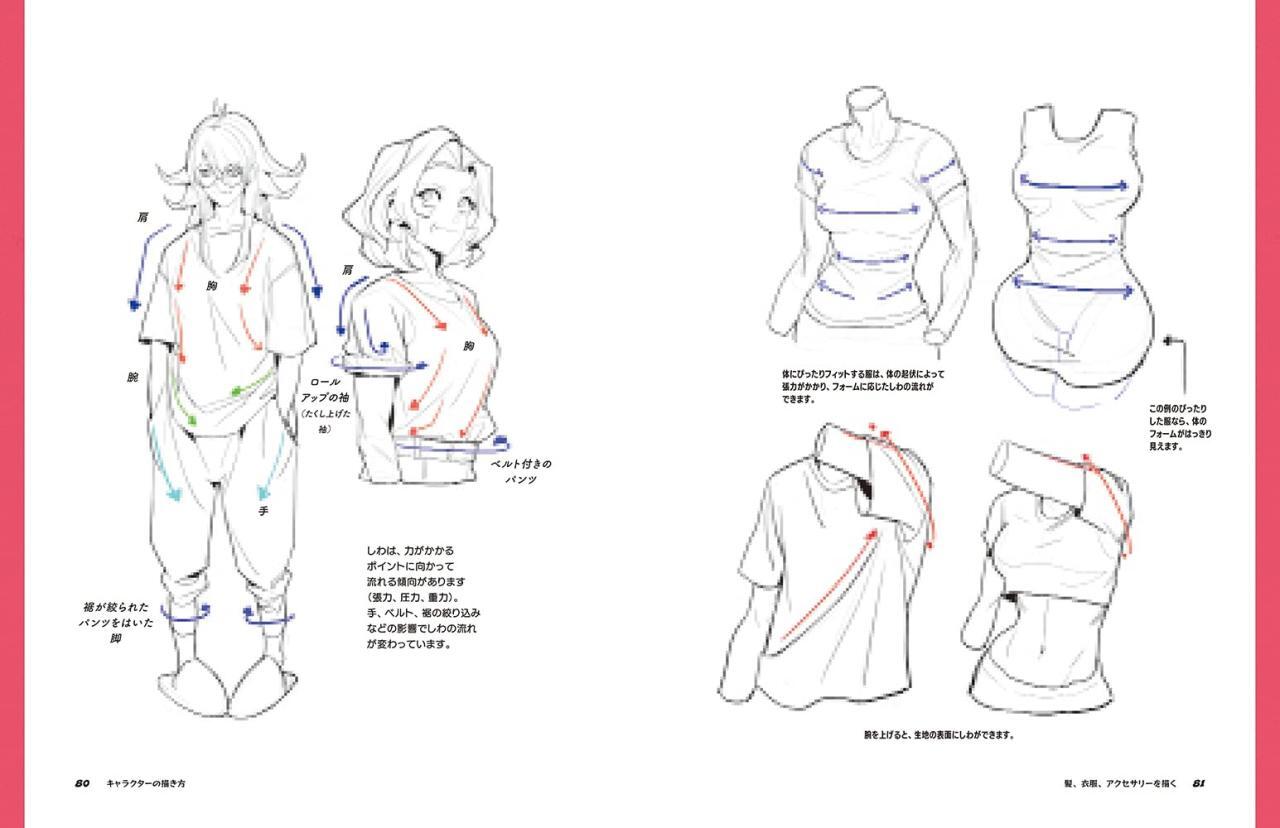
Understanding the fundamentals of human anatomy is crucial for character artists seeking to create realistic and dynamic figures. A thorough grasp of muscle groups, skeletal structure, and body proportions not only enhances the artistic representation but also aids in portraying movement and emotion effectively. This knowledge serves as the foundation upon which artists can build their unique styles while ensuring anatomical accuracy.
Major Muscle Groups and Their Functions
The human body consists of various muscle groups that play pivotal roles in movement and stability. Recognizing these muscle groups is essential for character art, as they influence the design and poses of characters. The major muscle groups include the following:
- Deltoids: Located in the shoulders, these muscles are responsible for arm rotation and lifting.
- Pectorals: These chest muscles aid in the movement of the shoulders and arms, crucial for upper body strength.
- Latissimus Dorsi: Found in the back, this muscle group helps in arm movement and stabilizing the torso.
- Abdominals: Central to body stability and movement, these muscles support the spine and assist in bending and twisting motions.
- Quadriceps: This group of muscles at the front of the thigh is essential for leg extension and mobility.
- Hamstrings: Located at the back of the thigh, these muscles are crucial for bending the knee and running.
- Gastrocnemius: This calf muscle plays a key role in walking, running, and jumping by enabling ankle movement.
Understanding these muscle groups allows artists to accurately depict movement, posture, and the physicality of characters in their art.
Skeletal Structure and Its Influence on Character Design
The skeletal structure serves as the framework for the human body, significantly influencing character design. The bones dictate the overall shape, proportions, and movement capabilities of a character. Key components of the skeletal structure include:
- Skull: The shape of the skull can define a character’s personality, age, and even species in fantastical designs.
- Vertebral Column: The spine’s curvature affects posture and balance, contributing to the character’s stance and movement.
- Rib Cage: This structure protects vital organs and influences the upper body’s form and movement.
- Pelvis: The pelvis affects the character’s gait and overall silhouette, impacting how the lower body moves.
- Limbs: The arm and leg bones dictate the range of motion and strength, allowing for dynamic poses and actions.
An in-depth understanding of skeletal anatomy provides artists with the ability to create characters that are not only visually appealing but also anatomically plausible.
Body Proportions Commonly Used in Character Art
Proportions are a vital aspect of character design. They determine how the various parts of the body relate to each other and contribute to the overall aesthetic. Commonly used body proportions include:
- Eight Heads High: A standard proportion where the height of the figure is approximately eight times the height of the head. This is often used for adult characters.
- Seven Heads High: Used for more stylized or younger characters, this proportion creates a more childlike silhouette.
- Proportion of Limbs: The arms typically reach to mid-thigh, and the legs usually account for about half of the total height, creating a balanced appearance.
- Waist to Hip Ratio: Influences the character’s perceived gender and body type, often used in character design to convey specific traits.
These proportions serve as guidelines for artists, allowing for the creation of believable characters while also providing room for stylistic expression. Understanding and applying these principles effectively enhances both the realism and artistic intent in character art.
Simplification Techniques for Artists
Simplifying anatomy in character art is a valuable skill that allows artists to convey the essence of human form without becoming overwhelmed by intricate details. By mastering simplification techniques, artists can create more stylized and expressive characters while maintaining anatomical accuracy. This process not only streamlines the drawing experience but also enhances the overall appeal of the artwork.
To effectively simplify the human figure, artists can implement several methods that break down complex anatomical structures into easily manageable components. The following techniques Artikel the process of reducing details while preserving character identity.
Breaking Down the Human Figure into Basic Shapes
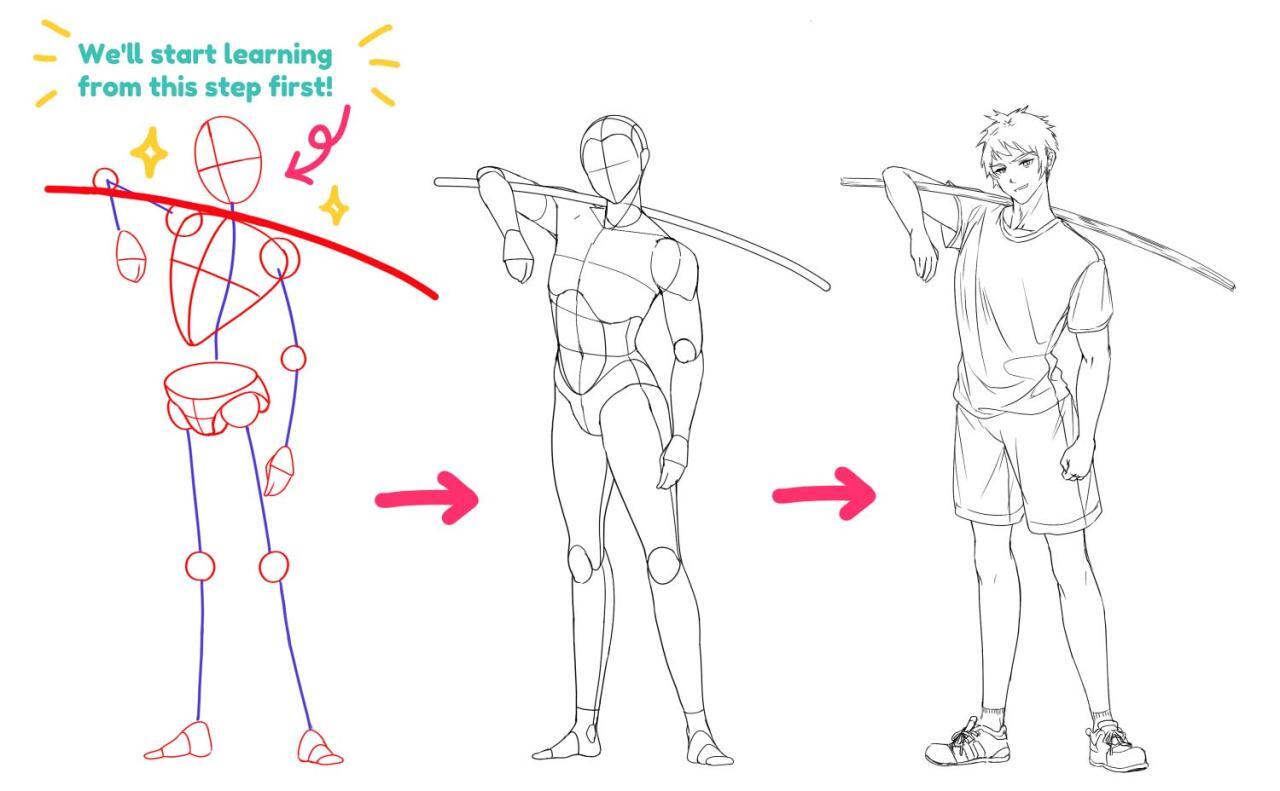
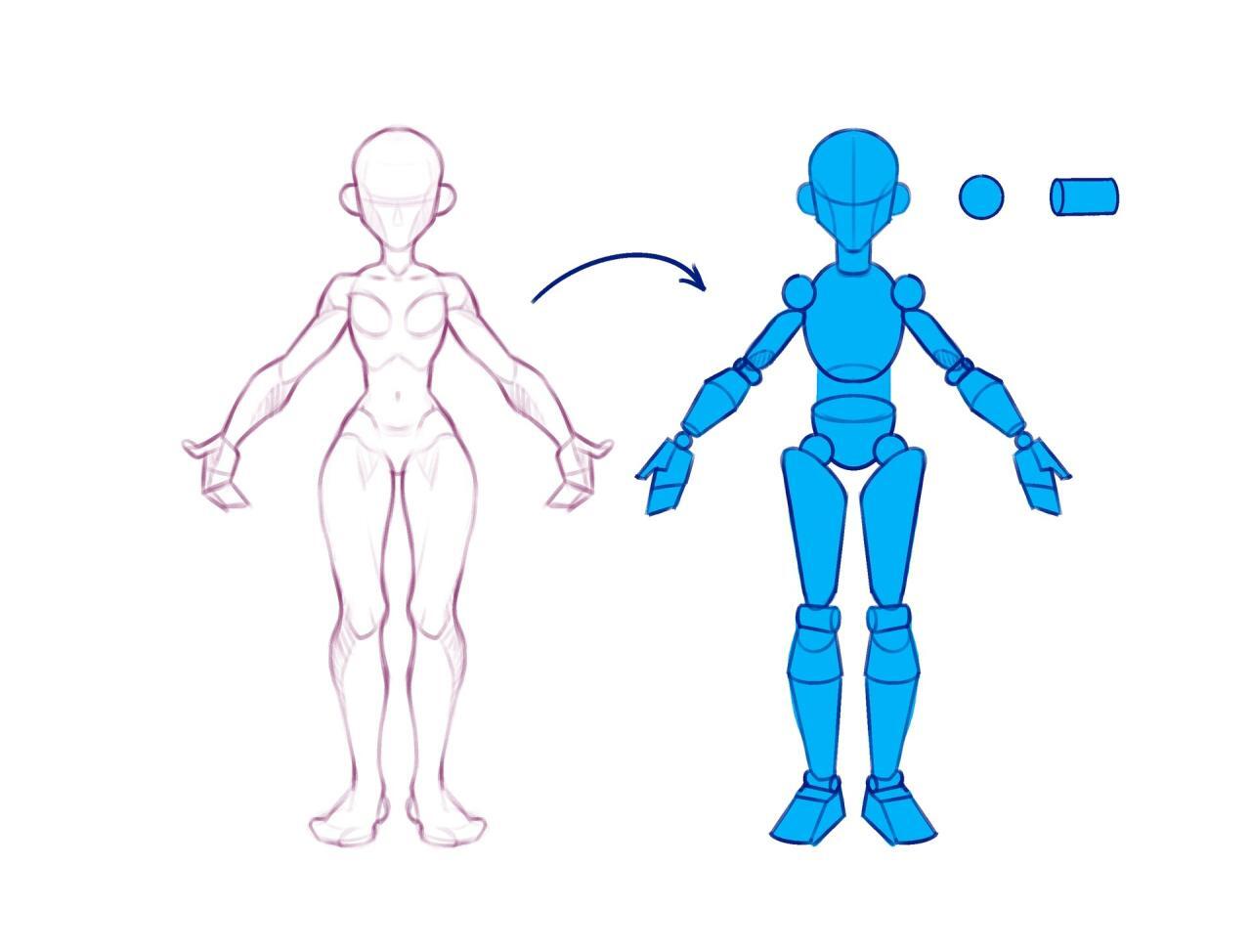
When approaching the human figure, it is advantageous to start with basic geometric shapes. This method allows artists to establish a solid foundation and proportions before adding complexity. The following steps Artikel this process:
1. Identify Key Shapes
Begin by identifying the primary shapes that represent the torso, limbs, and head. Common shapes include rectangles for the torso, circles for joints, and cylinders for limbs.
2. Establish Proportions
Use the basic shapes to determine the proportions of the figure. The average adult human body can be represented using eight heads in height, allowing for easy scaling of the body parts.
3. Construct the Framework
Draw a light sketch of the basic shapes, connecting them to Artikel the pose of the character. Focus on the flow of the body, ensuring that the shapes interact naturally.
4. Refine the Shapes
Gradually refine the basic shapes into more defined forms, maintaining the essence of the character. This can include adjusting the contours of the limbs and torso to reflect muscularity or volume.
5. Add Details
Once the simplified structure is in place, begin adding details such as facial features, clothing, and other elements while preserving the established silhouette.
Using Reference Images Effectively
Reference images play a crucial role in the simplification process by providing visual cues and anatomical accuracy. Employing strategies to utilize these images can significantly enhance the quality of character designs.
Select Relevant References
Choose images that emphasize the anatomical features you wish to capture. This could include photographs of human figures in dynamic poses or anatomical diagrams showcasing muscle groups.
Analyze the Form
Examine the reference images for underlying shapes and structures. Break down the complex forms into simpler components, similar to the methodical approach used in basic shape construction.
Focus on Key Details
Identify the critical details that express the character’s identity, such as facial expressions or unique physical traits. Concentrate on these elements when simplifying the design, ensuring they remain prominent.
Practice Gesture Drawing
Engage in gesture drawing using reference images to capture the essence of movement and form. This practice helps in understanding the flow and rhythm of the human body, essential for effective simplification.
Incorporating these simplification techniques will empower artists to create compelling character art that resonates with viewers while maintaining a clear representation of human anatomy. By focusing on basic shapes and utilizing reference images strategically, artists can navigate the complexities of anatomy with confidence and creativity.
Applying Simplified Anatomy in Character Art
Simplified anatomy serves as a vital tool for artists aiming to create characters that are both expressive and dynamic. By reducing complex anatomical structures to their fundamental forms, artists can focus on the essence of movement and emotion, enhancing the overall impact of their character designs.The application of simplified anatomy in character art significantly enhances the visual storytelling aspect of a character’s design.
When anatomical forms are distilled to their basic shapes, it allows for a clearer expression of personality and action. For instance, a character with exaggerated limb proportions can convey energy and vivacity, while a more compact figure may evoke stability and strength. This simplification fosters a more immediate connection between the audience and the character, making their emotions and movements more relatable.
Character Designs Utilizing Simplified Anatomical Forms
Numerous character designs exemplify the effective use of simplified anatomy. By studying these examples, artists can gain insights into how to manipulate anatomical forms to achieve desired effects.One prominent example is the character design found in animated films such as Pixar’s “The Incredibles.” The characters possess exaggerated proportions, such as large hands and feet, which not only enhance movement but also emphasize personality traits—Mr.
Incredible’s musculature suggests strength, while Elastigirl’s elongated limbs hint at flexibility and adaptability.Another example is in the realm of cartoons, where characters like those from “Adventure Time” showcase minimalist anatomy. The characters are often comprised of basic shapes—circles, squares, and triangles—which allows for expressive actions and emotions with minimal detail. This simplicity invites viewers to engage imaginatively with the character’s journey.
Adapting Simplified Anatomy for Various Character Styles
Different character styles necessitate unique adaptations of simplified anatomy. Understanding these variations allows artists to create diverse and compelling characters that fit within their specific narrative contexts.In cartoonish styles, exaggerated proportions are often used to convey emotions and actions dramatically. For instance, large heads relative to the body can express innocence or childishness, while elongated bodies can convey speed or agility.
The focus here is on exaggeration and simplification, allowing the character’s personality to shine through without the distraction of realism.Conversely, in realistic styles, artists may adopt a more nuanced approach to simplification while still retaining the essence of human anatomy. Simplified anatomical forms in realism may involve smoothing out sharp angles and reducing complexity while maintaining an adherence to anatomical correctness.
This balance allows for characters that feel grounded yet still embody the artistic interpretation desired.
“Emphasizing simplified anatomical forms enhances both the expressiveness and dynamism of character art.”
By understanding these principles and studying effective examples, artists can master the application of simplified anatomy, enabling them to create characters that resonate with audiences on both emotional and visual levels.
Tools and Resources for Learning Anatomy
In the journey to master character art, understanding human anatomy is crucial. Artists often seek various tools and resources to enhance their knowledge and skills in this domain. This segment will explore essential books, online courses, and software that can significantly aid in learning and simplifying anatomy for artistic purposes.
Essential Books and Online Courses
A solid foundation in anatomy can be achieved through various books and online courses tailored specifically for artists. These resources provide critical insights and illustrations that cater to different learning styles.
- “Anatomy for Sculptors: Understanding the Human Figure” by Uldis Zarins
-This book offers a unique perspective on human anatomy with clear illustrations and explanations, making it ideal for artists. - “Figure Drawing: Design and Invention” by Michael Hampton
-Focused on figure drawing, this resource emphasizes simplification techniques that can be applied directly to character art. - Coursera: “The Anatomy of the Human Body”
-An online course that Artikels the basics of human anatomy, using visual aids to reinforce learning. - Skillshare: “Character Design: From Concept to Creation”
-This course integrates simplified anatomy principles into character design, making it invaluable for aspiring artists.
Useful Software and Apps
Technology can enhance the study of anatomy through various applications and software designed specifically for artists. These tools facilitate interactive learning, enabling users to visualize and simplify anatomical structures.
- 3D Anatomy Apps (such as Complete Anatomy)
-These applications provide a 3D model of the human body, allowing users to explore anatomy from multiple angles and simplify complex forms. - Posemaniacs
-An online tool featuring a vast array of poses and figures, which assists artists in studying anatomy through dynamic representations. - ArtPose
-This app offers adjustable 3D models for artists, enabling the customization of poses to study muscle dynamics effectively.
Comparison of Artistic Styles that Utilize Simplified Anatomy
Understanding different artistic styles that incorporate simplified anatomy can provide artists with a broader perspective on how anatomy can be interpreted creatively. The following table illustrates various styles and their characteristics.
| Artistic Style | Description | Key Features |
|---|---|---|
| Cartoon | A style emphasizing exaggerated features and simplified forms. | Bold lines, vibrant colors, and minimalistic anatomical detail. |
| Anime/Manga | Characterized by stylized visual aesthetics, often featuring simplified anatomy. | Large eyes, elongated limbs, and expressive poses. |
| Abstract | A departure from realistic representation, focusing on form and color. | Non-representational anatomy, emphasis on shapes and bold colors. |
| Surrealism | This style blends dreamlike elements with distorted anatomical structures. | Unconventional proportions, merging of human and fantastical elements. |
Common Mistakes and How to Avoid Them
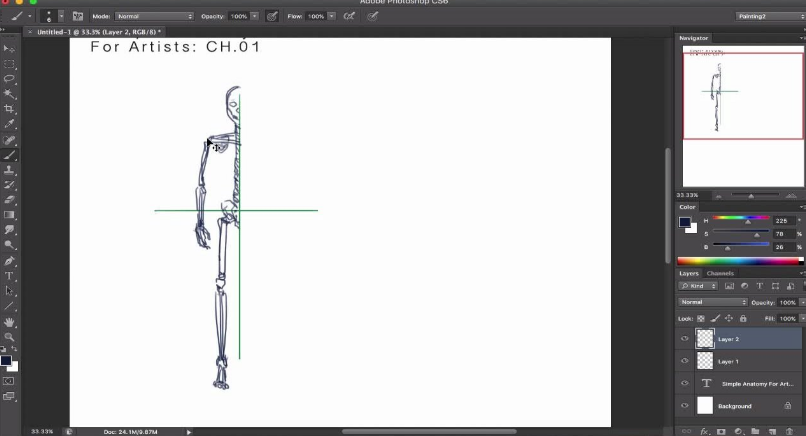
When simplifying anatomy for character art, artists often encounter various pitfalls that can detract from the overall quality of their designs. Understanding these common mistakes and knowing how to rectify them is crucial for maintaining both creativity and anatomical accuracy. This section will address frequent errors, provide examples of over-simplification, and share effective strategies to enhance anatomical fidelity while simplifying.
Frequent Pitfalls in Simplifying Anatomy
Simplifying anatomy does not imply ignoring the fundamental structures; rather, it involves identifying key forms while retaining a sense of realism. However, artists may inadvertently fall into traps that compromise their work. Some common mistakes include:
- Neglecting Proportions: Artists sometimes simplify forms without considering the relative sizes and proportions of different body parts, resulting in disproportionate figures.
- Ignoring Joint Mechanics: Failing to account for how joints function can lead to stiff or unrealistic poses, detracting from the character’s believability.
- Over-reduction of Details: While it is important to simplify shapes, over-reduction can create a flat or unappealing look, stripping the character of personality and depth.
- Misrepresenting Muscle Groups: Simplifying muscle structures without a solid understanding can lead to inaccurate depictions of body dynamics and movements.
Examples of Over-simplification and Its Impact
Over-simplification can significantly impact character design, making figures appear unnatural or unengaging. For example, an artist might reduce the human form to basic geometric shapes, such as cylinders and spheres, without considering how these shapes translate into lifelike anatomy. While this approach may initially aid in construction, the final result often lacks the nuance and expressiveness that detailed anatomy provides.
A well-known case is the ‘disneyfication’ of characters, where exaggerated proportions and simplified features lead to designs that can feel less relatable. A character with oversized heads, tiny limbs, and minimal facial features might convey a particular style, but it can also hinder emotional expression and viewer connection.
Tips for Maintaining Anatomical Accuracy While Simplifying
Balancing simplification with anatomical accuracy is essential for effective character art. Here are some strategies to consider:
- Focus on Key Landmarks: Identify and emphasize anatomical landmarks, such as joints and muscle attachments, to maintain a sense of structure within simplified forms.
- Use Reference Material: Consult anatomical guides or real-life references to inform your simplification process, ensuring that you understand the underlying structures.
- Develop a Gesture Library: Practicing quick sketches of dynamic poses can help you internalize the flow and movement of the human body, allowing for more fluid simplification.
- Iterate and Revise: Don’t hesitate to revisit your designs multiple times. Refining your simplified anatomy can help strike the right balance between stylization and realism.
“Understanding the essence of human anatomy is key to creating characters that resonate with viewers, even when simplification is the goal.”
Practice Exercises for Mastery
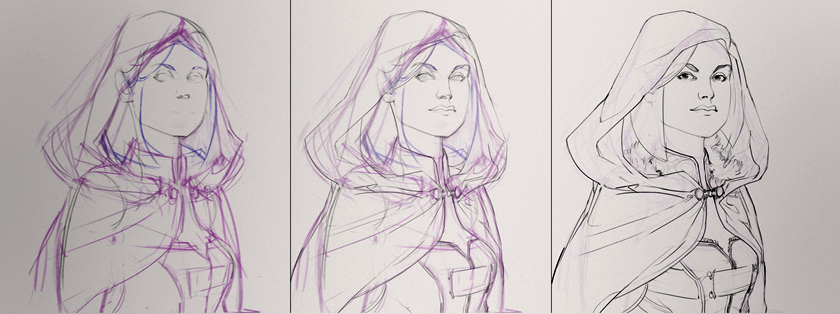
To achieve mastery in simplified anatomy for character art, consistent practice is crucial. It not only reinforces the knowledge gained but also enhances the ability to apply that knowledge effectively. Engaging in targeted exercises can accelerate skill development and build confidence in creating stylized characters.A structured set of exercises can help artists internalize anatomical principles and improve their ability to visualize and simplify complex forms.
The following exercises are designed to challenge artists while reinforcing fundamental concepts of anatomy through simplification.
Basic Shapes Challenge
One effective way to practice simplified anatomy is by creating characters using only basic geometric shapes. This challenge encourages artists to focus on the underlying forms and proportions without getting caught up in intricate details. To undertake this challenge, artists can follow these steps:
- Choose a character concept, such as a hero, villain, or creature.
- Break down the character into basic shapes, such as circles, rectangles, and triangles, to represent different body parts.
- Sketch the character using these shapes, emphasizing proportions and overall silhouette.
- Refine the shapes gradually, adding more complexity while retaining the simplified essence.
This exercise helps in developing a strong foundation in visualizing characters, as it reinforces the importance of basic shapes in constructing more detailed forms.
Regular Anatomical Studies Routine
Establishing a routine for anatomical studies and character sketches ensures consistent progress. A well-organized study routine encourages artists to dedicate time to understanding anatomy in a structured manner.A recommended routine could include:
- Daily gesture drawing sessions to capture the fluidity and motion of the human body.
- Weekly studies focusing on specific body parts, such as hands, feet, or facial features, using reference materials.
- Monthly character design projects that incorporate learned anatomical principles and simplified techniques.
By incorporating these elements into a regular practice schedule, artists can cultivate a deeper understanding of anatomy and hone their skills in character art.
Sketching Exercises for Simplification
In addition to structured routines, engaging in spontaneous sketching exercises can facilitate mastery over simplified anatomy. These exercises can be performed anywhere and at any time, making them a flexible addition to an artist’s practice.Suggested sketching exercises include:
- Quick sketches of figures from life or reference images, focusing on capturing the essence of the pose rather than detailed anatomy.
- Creating thumbnail sketches of characters using exaggerated proportions to explore unique design choices.
- Participating in art challenges or prompts that encourage daily sketch submissions, fostering community feedback and growth.
These sketching exercises allow for experimentation and creativity while reinforcing a solid understanding of simplified anatomical forms.
Closing Notes
In conclusion, mastering the simplification of anatomy is a valuable skill for any character artist. By applying the techniques discussed, such as breaking the human figure into basic shapes and learning from effective examples, artists can enhance their work while avoiding common pitfalls. Embracing these strategies ensures that character designs not only maintain anatomical fidelity but also showcase unique styles and expressions.