Delving into How to Draw Buildings and Architecture in Perspective, this exploration invites both novice and experienced artists to unlock the secrets of creating captivating architectural illustrations. Understanding perspective is essential for effectively portraying the depth and complexity of structures, enabling artists to convey realistic and compelling images.
The journey begins with the fundamentals of perspective, where one learns to master various techniques, from simple geometric shapes to intricate details, all while applying the principles that breathe life into their drawings. As we progress, we will explore essential tools, methods for adding depth, and common pitfalls to avoid, equipping artists with the skills necessary to elevate their work.
Understanding Perspective Basics
In the realm of architectural drawing, perspective plays a pivotal role in conveying depth and spatial relationships. It allows artists and architects to represent three-dimensional structures on a two-dimensional plane, creating a realistic impression for viewers. Mastering perspective is essential for accurately depicting buildings, as it provides the visual cues necessary for understanding the structure’s form and placement in relation to the environment.The concept of perspective in art stems from the need to mimic how the human eye perceives the world.
Different types of perspective—namely one-point, two-point, and three-point perspective—serve unique purposes in architectural drawings, influencing how a viewer interprets the dimensions and angles of a building. Each perspective method emphasizes different aspects of a structure, catering to the intended visual impact.
One-Point Perspective
One-point perspective is characterized by a single vanishing point on the horizon line, where all parallel lines converge. This method is particularly effective for depicting interiors or buildings viewed head-on, as it enhances the sense of depth. For example, when drawing a straight corridor or a long row of buildings, the lines of the walls and ceiling recede towards the single vanishing point, providing a clear focal point.
“In one-point perspective, depth is created through converging lines leading to a single point on the horizon.”
Two-Point Perspective
Two-point perspective involves two vanishing points located on the horizon line. This technique is ideal for representing the corners of objects or buildings, offering a more dynamic view that showcases multiple sides. Commonly used in urban landscapes, this perspective allows the artist to depict structures at an angle rather than straight on. For instance, when illustrating a building situated at a street corner, the vertical lines of the building extend upwards while the horizontal lines angle towards the two vanishing points.
“Two-point perspective enhances realism by providing a more comprehensive view of architectural forms.”
Three-Point Perspective
Three-point perspective introduces a third vanishing point, typically placed above or below the horizon line. This method is employed when depicting tall buildings or structures viewed from a significant height or vantage point. An example is a skyscraper drawn from the street level, where the vertical lines converge upwards towards the third vanishing point, contributing to an imposing sense of scale.
Alternatively, when viewed from above, the lines would converge downwards, enhancing the dramatic effect of height.
“Three-point perspective adds a layer of complexity, portraying dramatic height or depth in architectural designs.”
Through these three types of perspective, artists can effectively communicate the volume and spatial relationships of buildings, allowing viewers to appreciate the intricacies of architectural designs. Mastery in these concepts greatly enhances the quality and realism of architectural renderings, guiding the viewer’s eye and imagination in experiencing the envisioned structure.
Tools and Materials for Drawing
Creating accurate and compelling perspective drawings of buildings and architecture requires a selection of high-quality tools and materials. The right equipment not only enhances precision but also allows for greater creativity and expression in architectural sketches. This section details the essential drawing tools and suitable paper types, along with a comparison between traditional and digital drawing tools.To achieve the best results in perspective drawing, various essential tools come into play.
The following list Artikels the key instruments that every aspiring architect and artist should consider incorporating into their toolkit:
Essential Drawing Tools
The following tools are fundamental for creating perspective drawings:
- Pencils: Graphite pencils in various grades (ranging from H for hard to B for soft) allow for different shading techniques and line quality.
- Rulers and T-squares: These are critical for establishing straight and accurate lines, especially when drawing vanishing points and horizon lines.
- Protractors: Useful for measuring and drawing angles, protractors aid in achieving correct perspective views.
- Erasers: Kneaded and precision erasers help refine details and correct mistakes without damaging the paper.
- Fine liners and markers: These are often used for outlining and adding final touches to drawings for clarity and emphasis.
Paper Types and Sizes
Choosing the right paper is equally important for architectural sketches. Different types and sizes of paper can significantly affect the outcome of your work. The following points highlight suitable options:
- Sketch Paper: Lightweight and inexpensive, ideal for rough drafts and initial sketches.
- Drawing Paper: Heavier and more textured, this type accommodates various media and allows for better erasing and layering.
- Bristol Board: A smooth, heavyweight paper suitable for detailed work and ink drawings, providing a professional finish.
- Watercolor Paper: Ideal for mixed media work, especially if incorporating washes or ink, as it handles moisture well.
- Sizes: Common sizes include A4 for studies and A3 or larger formats for detailed architectural plans and presentations.
Comparison of Traditional Tools and Digital Drawing Tools
Understanding the differences between traditional and digital drawing tools can help artists choose the best method for their projects. The following table summarizes key characteristics of each approach:
| Criteria | Traditional Tools | Digital Tools |
|---|---|---|
| Ease of Use | Requires physical skill and technique | User-friendly with undo options |
| Cost | Initial investment in materials | Software and hardware costs involved |
| Flexibility | Limited to physical changes | Easy to edit and adapt drawings |
| Style | Unique textures and finishes | Variety of styles with digital brushes |
| Portability | Requires physical space and materials | Portable; work can be saved on devices |
“Choosing the right tools is essential for translating your vision into a compelling architectural drawing.”
This comprehensive overview of tools and materials sets the foundation for creating powerful perspective drawings, enabling artists to cultivate their skills effectively.
Building Basic Shapes
To draw buildings effectively, one must first understand how to reduce complex architectural forms into fundamental geometric shapes. This simplification allows artists to focus on proportions, scaling, and overall composition before adding intricate details. By grasping these basic shapes, you can establish a solid foundation for any architectural drawing.Architectural structures can often be broken down into basic shapes like rectangles, squares, triangles, and cylinders.
This method not only simplifies the drawing process but also aids in achieving accurate proportions and perspectives. Recognizing the underlying geometric forms in architecture enables artists to recreate the essence of a building with greater ease and precision. Understanding how these shapes relate to one another in three-dimensional space is crucial for scaling.
Simplifying Structures into Basic Shapes
When tackling the drawing of a building, it is beneficial to identify the core geometric elements. The following points highlight the approach to simplifying architectural drawings:
1. Identify Geometric Shapes
Start by observing the building’s structure. Identify the primary shapes involved, such as:
Rectangles for the main body of the building
Triangles for roofs
Cylinders for columns and supports
2. Establish a Basic Framework
Draw a light Artikel using these shapes to form a basic structure. This framework will serve as a guide for your drawing.
3. Maintain Proportions
Use measurements or visual estimation to ensure that the shapes are proportionate. For example, if a building’s width is twice its height, maintain that ratio in your sketch.
4. Use Perspective Techniques
Employ one-point or two-point perspective techniques to give depth to your basic shapes. This can be achieved by drawing converging lines toward a vanishing point.
5. Refine the Shapes
Once the basic Artikel is complete, start refining the shapes by adding details such as windows, doors, and other architectural features.
Scaling and Proportion Techniques
Scaling and maintaining proportion are essential for realistic architectural drawings. The following techniques can assist you in achieving accurate proportions:
Use Reference Points
Establish reference points based on the size of known objects, like doors or windows, to ensure consistency in scale.
Grid Method
Utilize a grid system to keep proportions accurate. Draw a grid over your reference image and replicate it on your drawing surface to help maintain the integrity of sizes and spaces.
Proportional Dividers
Tools such as proportional dividers can assist in measuring and scaling dimensions accurately from reference images to your drawing.
Practice Observation
Regularly practice observing and sketching buildings in real life, noting their proportions relative to your own height or other familiar measurements.
Step-by-Step Guide for Drawing a Simple Building
Drawing a simple building using basic shapes can be broken down into manageable steps. Follow this method to create your architectural drawing:
1. Select a Building
Choose a simple building design, such as a house or small office.
2. Artikel Basic Shapes
Start with a rectangle for the main body.
Add a triangle on top for the roof.
Include rectangles for windows and doors.
3. Create a Light Sketch
Lightly sketch the Artikel of your shapes, ensuring they are proportionate and aligned.
4. Add Perspective
Incorporate perspective by drawing lines converging toward the vanishing point, adjusting the shapes as necessary to fit into this perspective.
5. Refine Details
Begin adding details such as bricks, window designs, and roof textures while maintaining the original shapes.
6. Final Touches
Darken the final lines, erase any unnecessary construction lines, and add shading to give depth and dimension to your drawing.By following these techniques and steps, the task of drawing buildings and architecture becomes more approachable, paving the way for creative expression in architectural illustration.
Adding Details to Structures
Incorporating details into architectural perspective drawings is essential for achieving a realistic representation of structures. Details such as windows, doors, and rooftops not only enhance the visual appeal of the drawing but also provide context and character to the buildings being depicted. This section will explore methodologies for integrating these elements effectively while adhering to the principles of perspective drawing.When adding details to structures in perspective, it is crucial to maintain the correct alignment with the vanishing points established earlier in the drawing process.
This ensures that all elements harmoniously blend into the overall composition. Attention to scale and proportions is paramount, as details that are too large or small can distort the viewer’s perception of depth and space. Furthermore, considering the architectural style of the building can influence how these details are represented.
Incorporating Architectural Features
To accurately represent architectural features such as windows, doors, and rooftops in perspective drawings, artists can utilize specific techniques and approaches. The following points Artikel effective methods for layering these details:
- Windows: Begin by drawing the window frames in alignment with the perspective lines. Use the height of the windows to determine their placement on the walls, ensuring they follow the vertical lines leading to the vanishing point. Consider the style—traditional windows may include sills and shutters, while modern designs might have clean lines and minimalistic features.
- Doors: When adding doors, establish their size in relation to the windows for scale consistency. Position the doors according to the perspective grid, ensuring that the top of the door aligns with the vanishing point. Architectural styles dictate the design; for instance, arched doors can be depicted through curved lines, while contemporary styles may feature rectangular shapes with glass panels.
- Rooftops: Different roofing styles require distinct approaches. For pitched roofs, draw the peak in line with the perspective points, then add overhangs and eaves to create depth. Flat roofs can be indicated with straight lines, while curved roofs may require a more rounded approach, aligning with the vanishing points.
Understanding various architectural styles enhances the representation of details in perspective. For example, Gothic architecture features intricate tracery and pointed arches, while Art Deco showcases geometric patterns and bold forms. Each style offers unique characteristics that can be emphasized in perspective drawings.
Layering Techniques for Realism
To achieve depth and realism in perspective drawings, layering details is an effective technique. This process involves building up elements incrementally, allowing for a more dynamic representation of space and structure. The following procedures can be utilized:
- Foreground Elements: Begin with the most prominent features, such as the main entrance or foreground windows. This establishes a foundation for the drawing and draws attention to focal points.
- Middle Ground Details: Once the foreground is established, add secondary details like smaller windows, doors, and architectural embellishments. These elements should be scaled accordingly to maintain the illusion of depth.
- Background Features: Finally, incorporate distant elements, such as trees, neighboring buildings, or atmospheric effects. These should be rendered with less detail and lighter tones to create a sense of distance and perspective.
The layering process not only adds realism but also guides the viewer’s eye through the artwork, enhancing the overall experience of the perspective drawing. Employing these techniques will significantly contribute to the quality and authenticity of your architectural representations.
Creating Depth and Dimension
In architectural drawing, achieving a sense of depth and dimension is crucial for conveying the three-dimensional nature of buildings on a two-dimensional surface. This section delves into key techniques, including the effective use of shadow and light, the differentiation of background and foreground elements, and the strategic employment of color and texture. Mastering these aspects enhances the visual impact of your architectural renderings.Understanding the role of light and shadow in perspective drawing is fundamental.
The play of light across a structure not only defines its form but also creates an illusion of depth. Properly applied shadows can ground a building within its environment, giving it weight and presence. To achieve this effect, consider the following techniques:
Importance of Shadow and Light
Effective use of shadow and light can transform a flat drawing into a dynamic representation. Key techniques include:
- Light Source Identification: Determine the direction of your light source early in your drawing process. This will dictate where shadows fall and how light interacts with surfaces.
- Shadow Types: Understand the difference between cast shadows, which are formed by objects blocking light, and form shadows, which are the darker areas on the object itself. Use both to enhance realism.
- Value Contrast: Utilize a range of values from light to dark to represent depth. High contrast can suggest sharp edges and dynamic forms, while softer transitions convey more rounded shapes.
In addition to shadows, creating a distinction in depth between background and foreground elements is vital. This method helps viewers navigate through your drawing, emphasizing the focal points while providing context.
Techniques for Creating Depth
Employing strategies that differentiate foreground buildings from their background counterparts enhances perspective. Consider these approaches:
- Scale Variation: Larger objects in the foreground will appear more significant compared to smaller ones in the background. This difference helps to create a sense of distance.
- Color Saturation: Utilize more vibrant colors for foreground elements and slightly muted hues for those in the background. This technique mimics how colors tend to fade with distance due to atmospheric perspective.
- Detail Level: Include more intricate details in the foreground while simplifying forms and details in the background. This contrast directs the viewer’s focus and suggests depth.
Color and texture also play pivotal roles in enhancing the three-dimensional feel of your drawings. The right combination can lead to more lifelike representations of buildings and architecture.
Use of Color and Texture
Incorporating color and texture enriches the perception of depth in your drawings. To effectively utilize these elements:
- Layering Techniques: Build layers of color to create depth. For example, apply a base color, followed by darker shades to suggest shadow and lighter ones for highlights.
- Textural Variation: Use different textures to denote various materials. For instance, a smooth surface can indicate glass, while a rough texture may represent brick.
- Complementary Color Schemes: Employ complementary colors to create visual interest and depth. For example, using warm colors in the foreground and cool colors in the background can enhance the sense of dimensionality.
Practicing with Real-Life References
Using real-life references is an invaluable method for mastering perspective in architectural drawing. Photographs and images of buildings allow artists to observe and replicate the complexities of structures as they exist in the real world. Engaging with these references enhances understanding of how light, shadow, and angles interact within various architectural forms.Photographs serve not only as mere inspiration but also as practical guides to detail identification and application in your drawings.
They present an opportunity to study the intricate elements that define different styles of architecture, enabling artists to practice and refine their skills. Below is a list of famous architectural structures that are particularly beneficial for practicing perspective.
Famous Architectural Structures for Perspective Practice
The following structures exemplify various architectural styles and present unique challenges in perspective drawing. Each offers distinct features that can help improve the artist’s ability to depict depth and dimension accurately.
- The Eiffel Tower (Paris, France)
-This iconic iron lattice tower provides opportunities to explore complex angles and vertical lines. - The Guggenheim Museum (Bilbao, Spain)
-Its organic shapes and curves challenge the artist’s ability to represent non-linear perspectives. - The Colosseum (Rome, Italy)
-This ancient amphitheater allows for studies in proportion and the effects of overlapping structures. - The Sydney Opera House (Sydney, Australia)
-Its unique sail-like design presents a fascinating study in perspective and light. - The Burj Khalifa (Dubai, UAE)
-This skyscraper showcases extreme height and vertical perspective challenges, useful for understanding foreshortening.
Comparison of Architectural Landmarks and Perspective Challenges
Understanding the unique perspective challenges presented by various architectural landmarks can significantly enhance your drawing skills. Below is a comparison table that Artikels selected structures along with their specific challenges in perspective drawing.
| Architectural Landmark | Location | Unique Perspective Challenges |
|---|---|---|
| The Eiffel Tower | Paris, France | Complex vertical lines and foreshortening due to height. |
| The Guggenheim Museum | Bilbao, Spain | Non-linear shapes that require understanding of curves. |
| The Colosseum | Rome, Italy | Overlapping structures and varied elevations. |
| The Sydney Opera House | Sydney, Australia | Dynamic angles and light reflection on curved surfaces. |
| The Burj Khalifa | Dubai, UAE | Height and extreme scale with heavy foreshortening effects. |
Common Mistakes and How to Avoid Them

In the practice of perspective drawing, several common errors can hinder the quality of the artwork. Understanding these mistakes and how to address them is crucial for developing your skills and achieving accurate representations of buildings and architecture. This section aims to identify frequent errors, provide corrective measures, and offer techniques for self-critique to enhance your perspective drawing abilities.
Frequent Errors in Perspective Drawing
Recognizing and correcting errors in perspective drawing is essential for improvement. The following list Artikels common mistakes and methods to avoid them:
- Incorrect Vanishing Points: Placing vanishing points in the wrong positions leads to distorted structures. Always ensure that your vanishing points align with the viewer’s eye level and the composition’s horizon line.
- Ignoring Scale and Proportion: Failing to maintain consistent scale can make buildings appear unrealistic. Use reference lines and grids to maintain accurate proportions throughout your drawing.
- Neglecting Foreground and Background Elements: Omitting details in the foreground or background can create a flat appearance. Incorporate overlapping elements and varying detail levels to enhance depth.
- Inconsistent Line Weight: Using the same line weight throughout can diminish the sense of depth. Vary line weights, using lighter lines for distant objects and bolder lines for those in the foreground.
- Overcomplicating Shapes: Attempting to draw complex structures without breaking them down into simpler forms often results in confusion. Start with basic geometric shapes and gradually add details.
Effective Self-Critique Techniques
Critiquing your own work is an invaluable part of developing your perspective skills. By assessing your drawings critically, you can identify areas for improvement. Here are effective techniques for self-critique:
- Take a Break: Step away from your work for a period. This allows you to return with fresh eyes, making it easier to spot inaccuracies and flaws.
- Use a Mirror: Viewing your drawing in reverse can help highlight asymmetries and perspective errors that are hard to notice from the original viewpoint.
- Ask for Feedback: Sharing your work with peers or instructors can provide new perspectives and constructive criticism that you may not have considered.
- Compare with References: Place your drawing next to reference images. Assess how closely it aligns with the perspective and proportions of the original structures.
Techniques for Overcoming Obstacles
Representing complex structures accurately can often present challenges. Employing specific techniques can help overcome these obstacles:
- Break Down Complex Structures: Analyze complex buildings by breaking them into simpler shapes. Sketch the overall form before adding intricate details.
- Utilize Grids: Overlay a grid on your reference images and your drawing area. This will assist in maintaining accurate proportions and perspective.
- Practice Drawing from Different Angles: Experiment with various viewpoints. This will enhance your understanding of how perspective works and improve your adaptability to different structures.
- Employ Digital Tools: Utilize software that allows for 3D modeling or perspective grids. Tools like SketchUp or Adobe Illustrator can help visualize complex designs before committing to paper.
Advanced Techniques in Perspective Drawing
In the realm of architectural drawing, advanced techniques in perspective allow artists to convey depth, scale, and realism effectively. Mastery of these techniques enhances the visual storytelling of architecture, marrying technical skill with artistic expression. This section delves into sophisticated strategies that elevate perspective drawing beyond the basics.
Atmospheric Perspective and Its Impact on Distance Representation
Atmospheric perspective, also known as aerial perspective, is a technique that plays a vital role in depicting distance in a drawing. By simulating the effects of the atmosphere on objects viewed from a distance, this technique alters color, contrast, and clarity, creating a more realistic representation of space. The impact of atmospheric perspective can be summarized through the following principles:
- Color Fading: Distant objects typically appear lighter and more bluish due to the scattering of light in the atmosphere.
- Detail Reduction: As objects recede into the background, their details become less distinct, encouraging softer edges and less contrast.
- Value Changes: Closer objects maintain higher contrast and richer colors, while those further away exhibit muted tones, enhancing the sense of depth.
Incorporating these elements into your perspective drawings can significantly enhance spatial understanding and evoke a more immersive experience for the viewer.
Integration of Human Figures and Nature for Scale
Incorporating human figures and elements of nature into perspective drawings is essential for establishing scale and context. The juxtaposition of buildings with figures or trees allows viewers to grasp the true dimensions of the architectural elements. To effectively integrate these components, consider the following strategies:
- Use Proportional Figures: Standard proportions can help in accurately depicting human figures according to the scale of the architecture. For instance, an average adult figure is typically around 5 to 6 feet tall.
- Natural Elements as Scale References: Trees, benches, and vehicles provide familiar points of reference that enhance the viewer’s sense of size and space.
- Dynamic Posing: Placing figures in active or dynamic poses can create a sense of movement, which contrasts statically portrayed architecture and further emphasizes scale.
These elements serve not only as scale references but also add life and narrative to the composition, allowing the viewer to engage more deeply with the scene.
Project for a Comprehensive Perspective Drawing
For a comprehensive project that encompasses advanced techniques in perspective drawing, consider creating a scene that incorporates an urban environment featuring various architectural styles, human figures, and natural elements. The project can follow these steps:
- Select a location with an interesting skyline or street view.
- Sketch a basic layout incorporating buildings of varying heights and styles to create visual interest.
- Add human figures in various poses to convey activity and energy within the space.
- Include trees, clouds, and other natural elements to enhance the sense of scale and depth.
- Apply atmospheric perspective techniques to distant elements, ensuring color and detail adjustments are consistent with distance representation.
- Refine the drawing by focusing on details, textures, and final touches that bring the scene to life.
This project allows you to practice and apply the advanced techniques discussed, resulting in a dynamic and visually compelling perspective drawing that conveys both architectural integrity and artistic flair.
Closing Summary
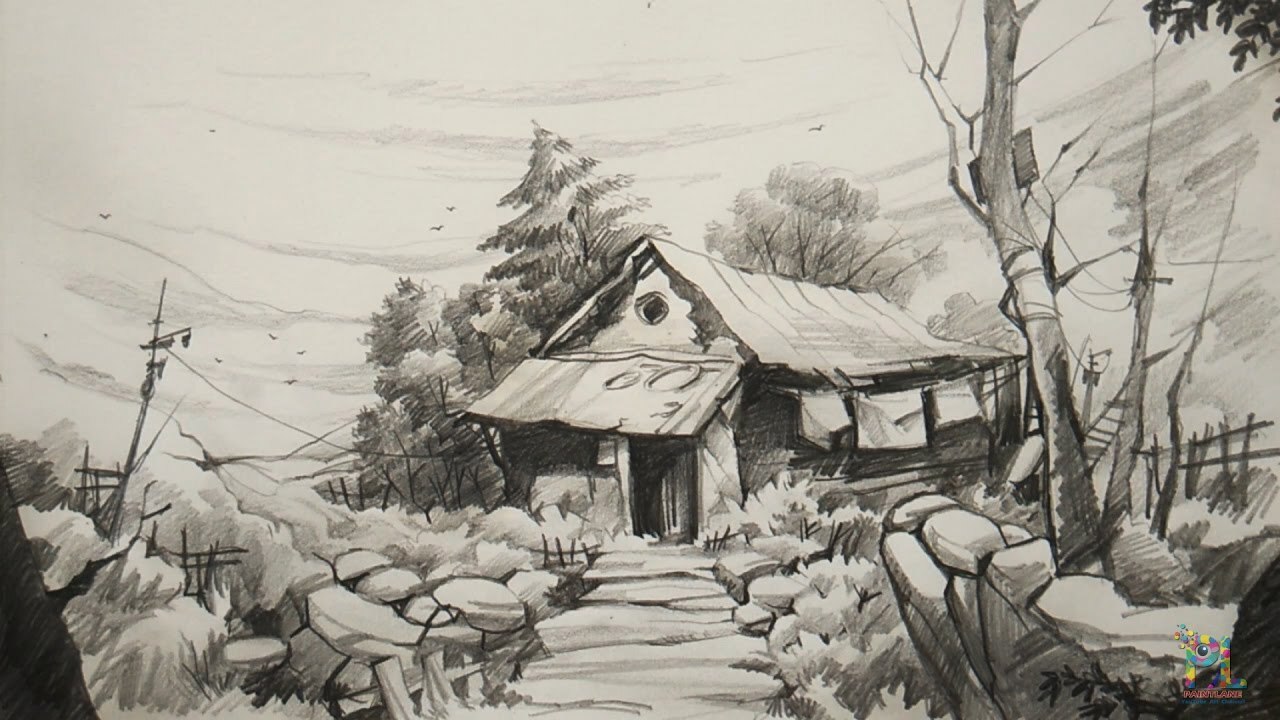
In summary, mastering How to Draw Buildings and Architecture in Perspective not only enhances one’s artistic ability but also deepens appreciation for the structures that surround us. By embracing the principles of perspective and practicing diligently, artists can create stunning illustrations that capture the essence of architectural beauty.